
Operational Inventory
& Accountability
Built on LORDS. Offline-First. Field-Validated.
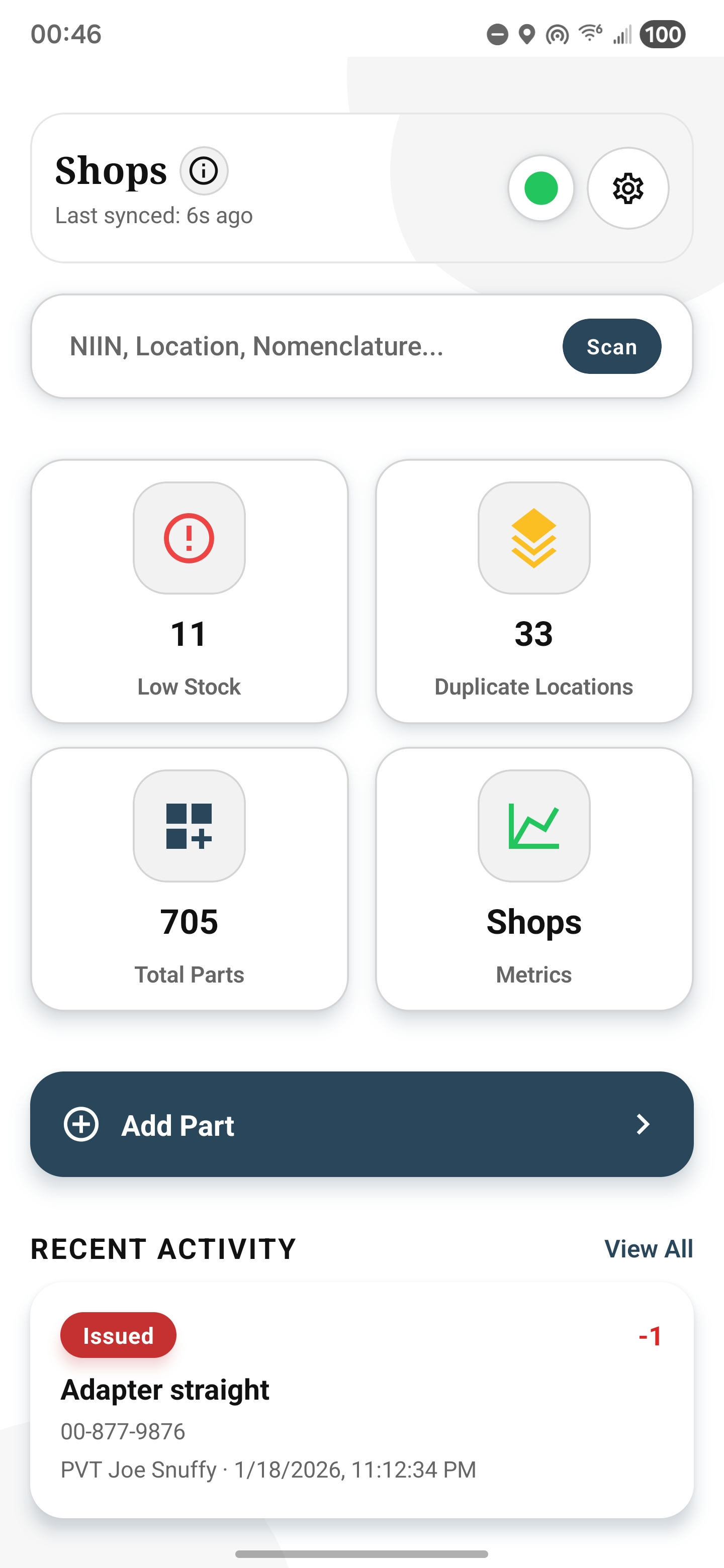
Dashboard — Operational Awareness at a Glance
The Dashboard provides immediate situational awareness without forcing users to dig through menus or reports. It surfaces inventory health, recent activity, and priority issues in a single view so teams can orient themselves quickly at the start of a shift or during handoff. The goal is fast awareness, not information overload.
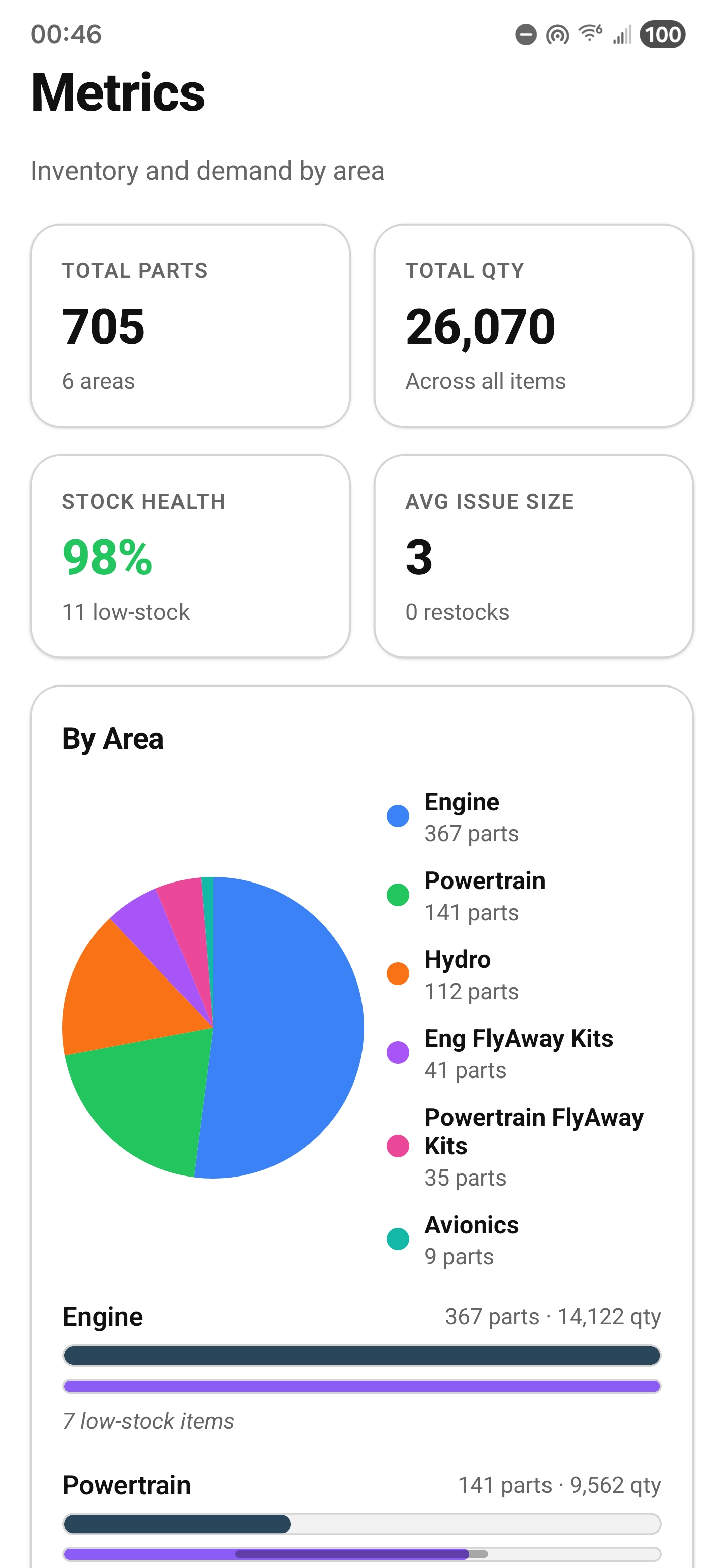
Metrics Overview — Visibility Without Reporting Burden
The Metrics Overview translates normal system usage into meaningful operational insight. Inventory levels, demand trends, stock health, and issue patterns are surfaced automatically as part of daily operations. This removes the need for manual reporting while giving leaders and supervisors real visibility into readiness and workload.
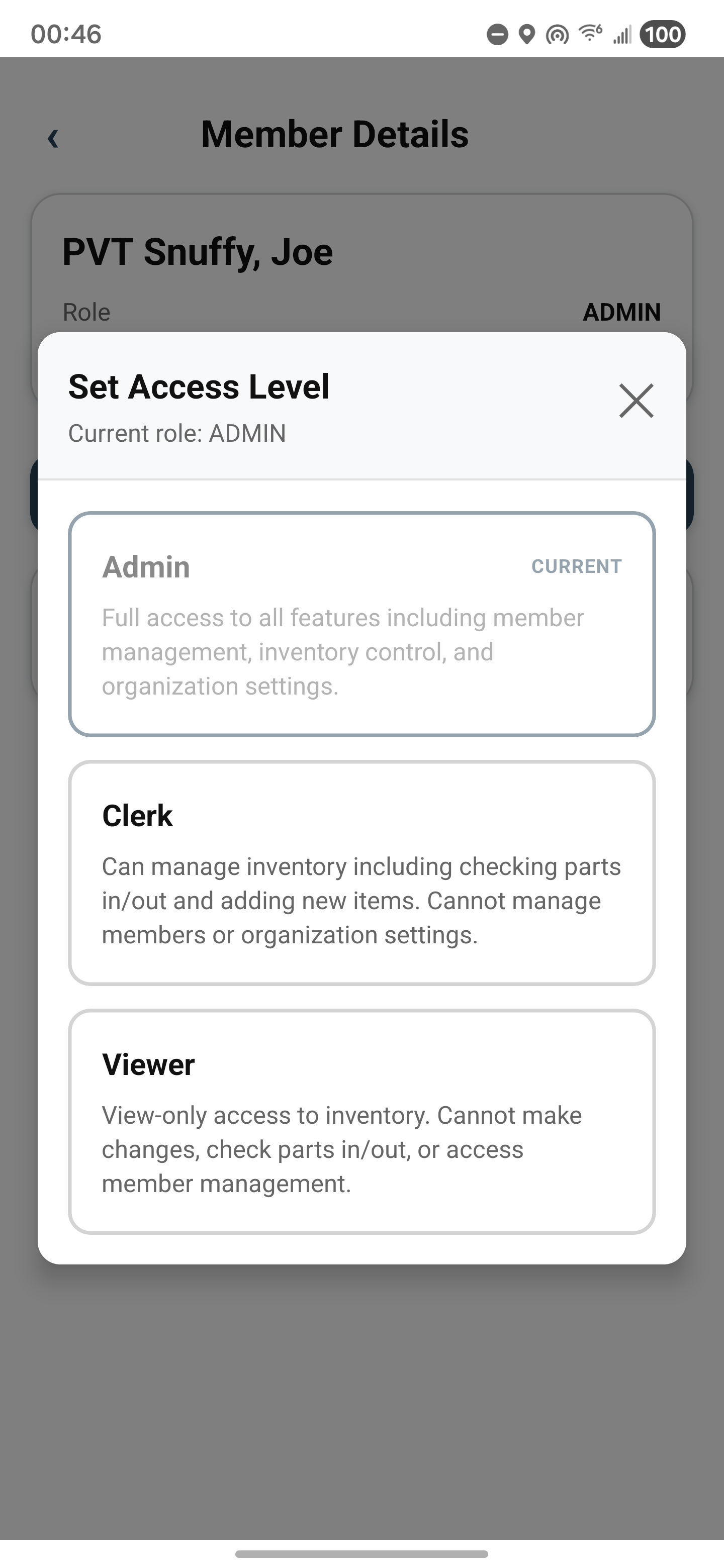
Role-Based Access Management — Control Without Friction
Not every user should have the same level of access. Role-based access ensures operators, supervisors, and administrators can each do their jobs without unnecessary risk. Permissions are enforced consistently across the system to protect data integrity, prevent accidental changes, and maintain accountability as teams scale and personnel rotate.
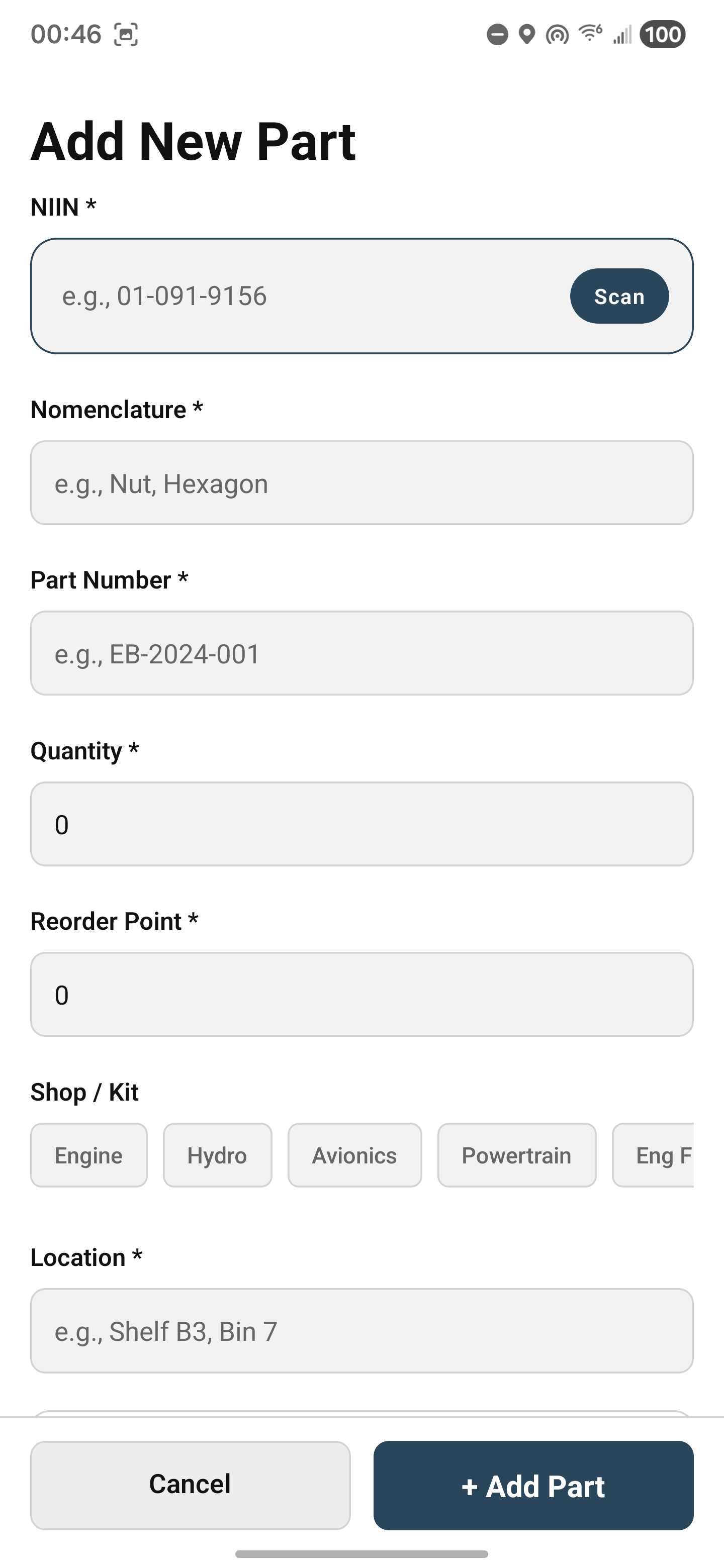
Add Part — Speed Without Compromising Accuracy
The Add Part workflow is optimized for fast entry in high-tempo environments. Structured fields, validation, and autocomplete reduce errors while keeping friction low. The design balances speed and accuracy so inventory can be captured correctly without slowing down maintenance activity.
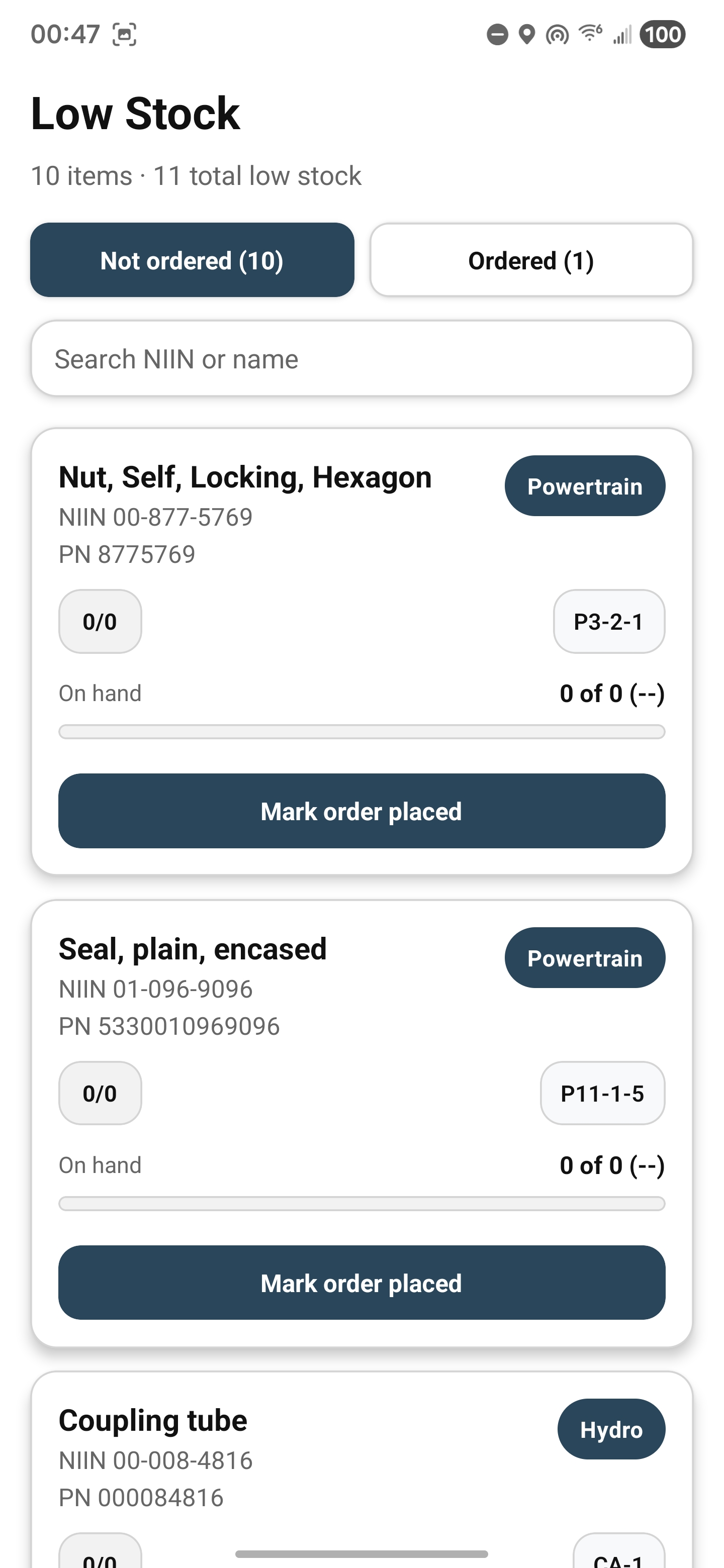
Low Stock — Problems Before They Become Failures
Low stock conditions are surfaced early so teams can act before shortages impact operations. Items are prioritized by severity, allowing users to focus attention where it matters most. This proactive approach replaces reactive scrambling with controlled replenishment planning.
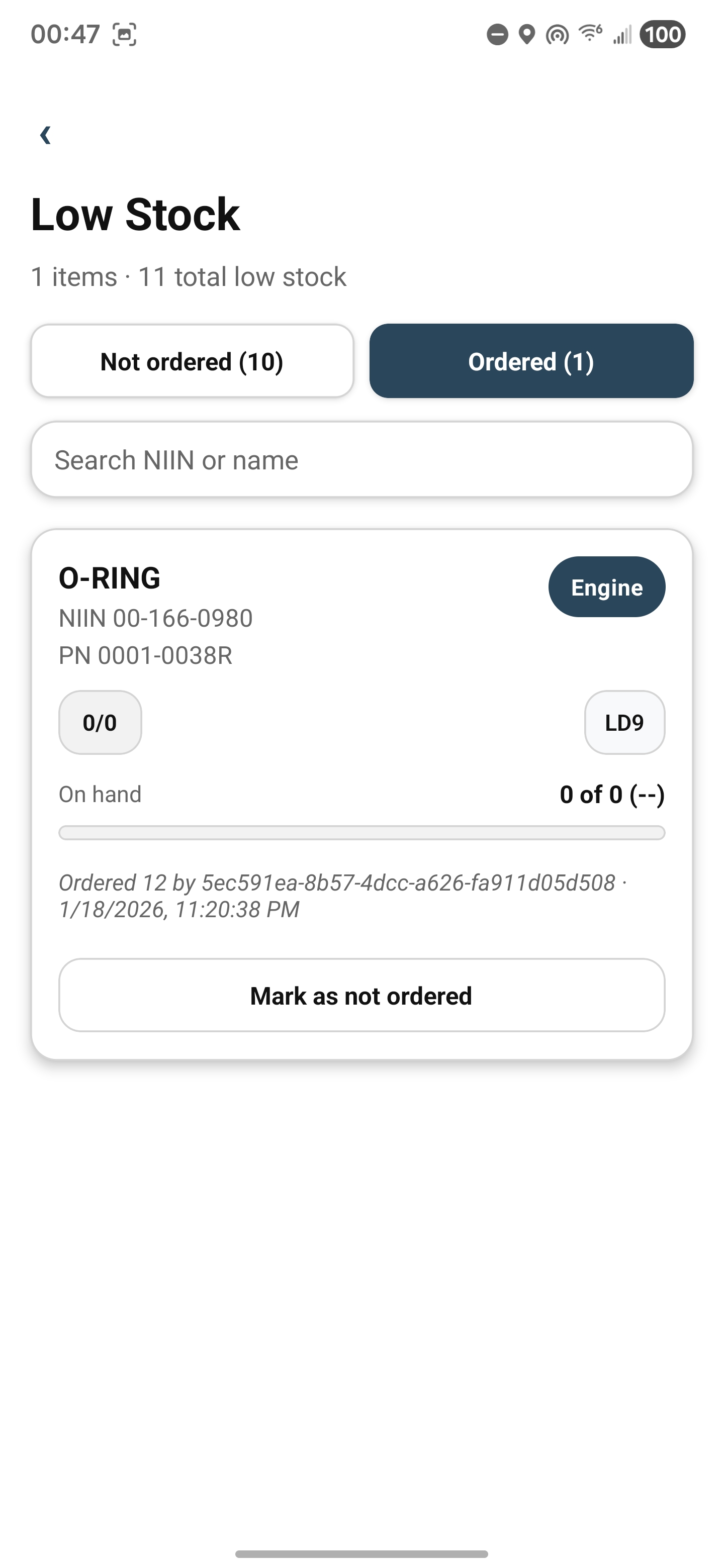
Low Stock Ordering — From Signal to Action
The Low Stock Order view turns shortages into structured actions. Affected items and quantities are carried forward automatically, reducing duplication and missed details. This ensures replenishment workflows remain accurate, accountable, and efficient without relying on manual reconciliation.
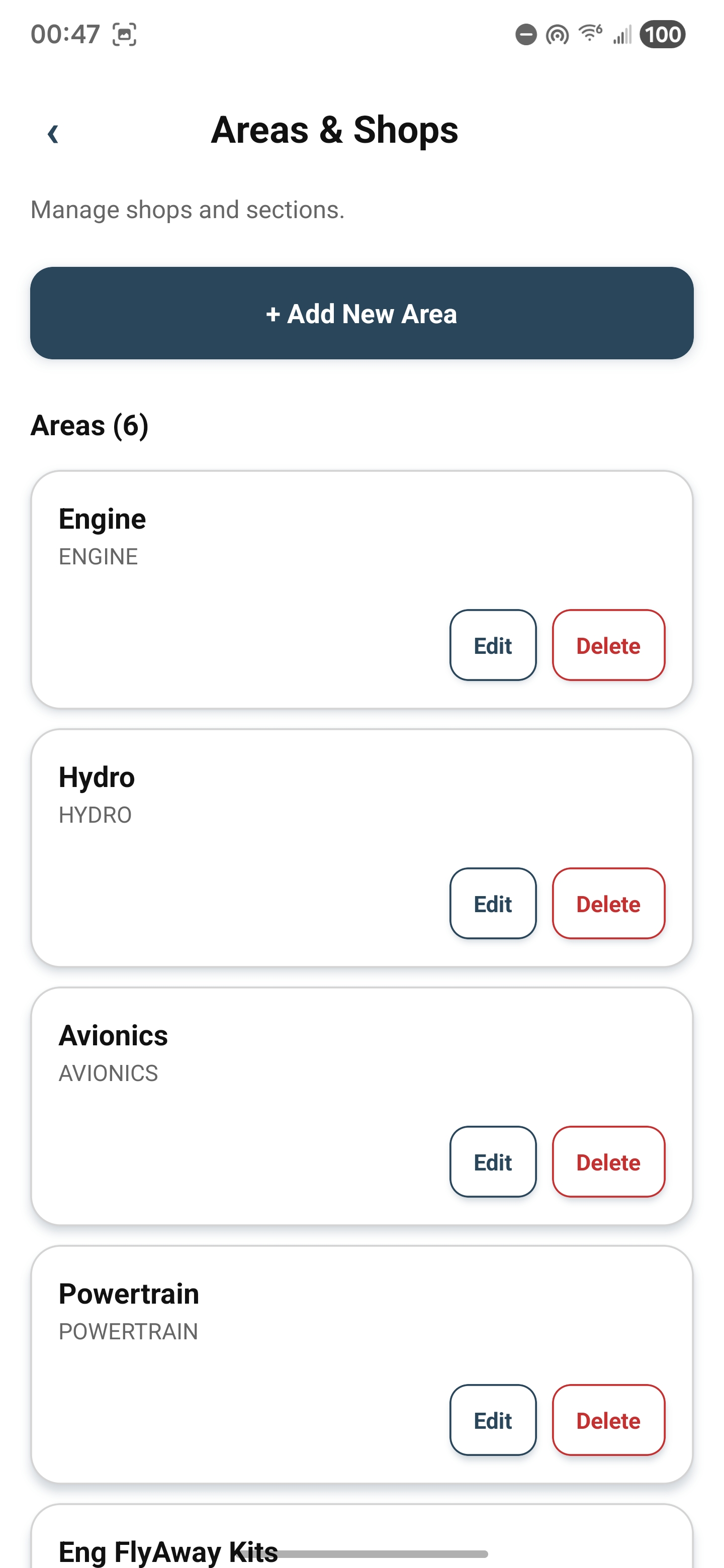
Areas & Shops — Inventory That Mirrors Reality
Inventory is organized by real physical or functional areas such as shops, sections, or storage locations. This structure reflects how teams actually work, making it easier to locate parts, assign responsibility, and maintain accountability. The system adapts to operational reality rather than forcing everything into a flat list.
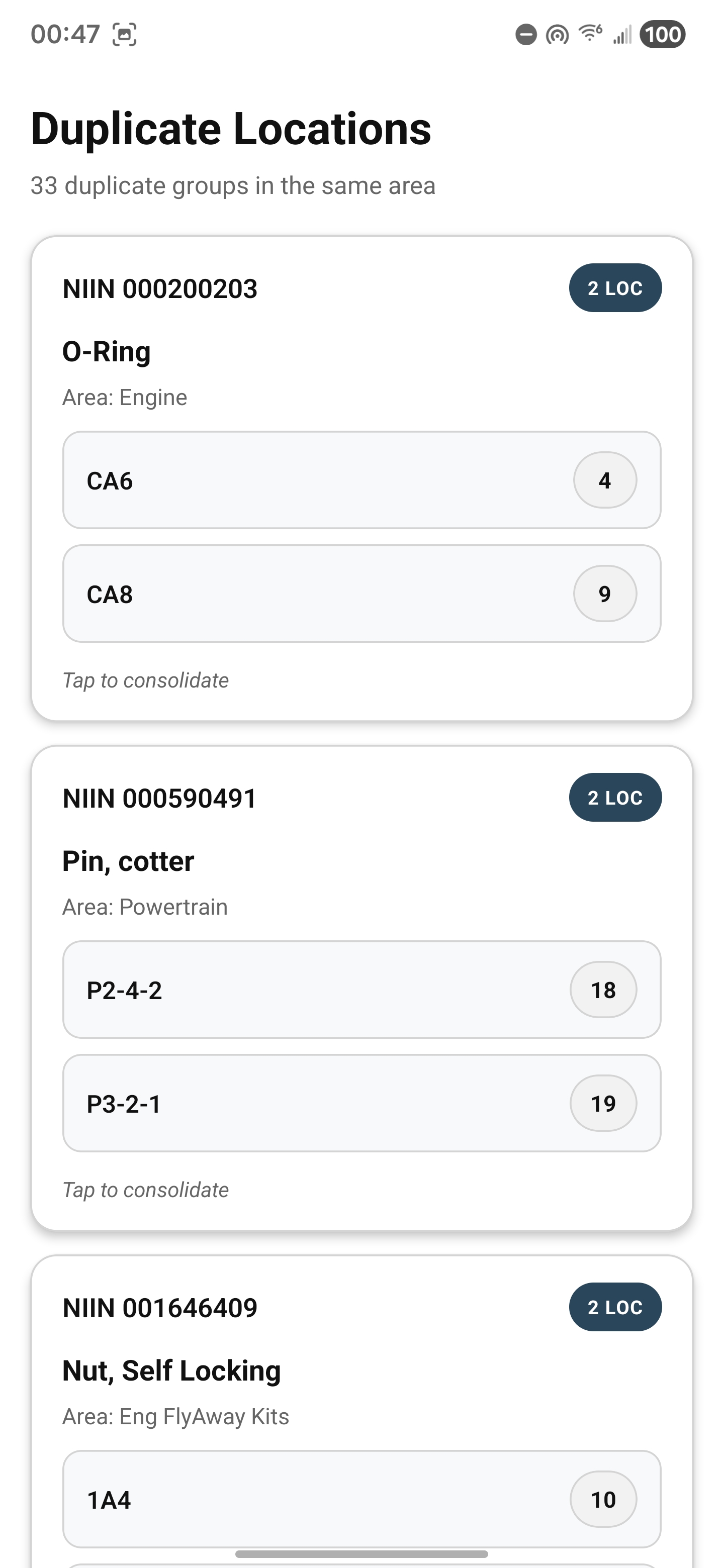
Duplicate Detection — Preventing Long-Term Data Drift
Over time, small inconsistencies in naming and location entry can quietly degrade data quality. Benchstock actively detects duplicate and near-duplicate locations and identifiers, allowing teams to correct issues before they compound. This keeps the inventory clean, searchable, and reliable without requiring manual audits.
Run your inventory like an operational system.
Not a spreadsheet. Not a paper log.
Request a Pilot